I have always been drawn to the notion of re-enchanting ordinary spaces. I believe in the power of play as a tool to promote creative problem-solving and education in all ages. Though immersive design can take many forms, my interests are grounded in heightening imagination as a platform of discovery through narrative-based events. This can take form through dynamic gameplay with clues, props, and team problem-solving, or through installations that transform everyday spaces into something entirely unexpected. Sensory immersion has profound authority as a facilitator of conflict transformation and imagining new futures.
Narrative-Based Gameplay
In April 2019, a classmate and I were awarded a research grant from Wellesley College to produce a narrative-based gameplay event that engaged different spaces on campus. Utilizing campus resources such as the archives, the print-making studio, and the lighting studio, we were able to fabricate props, costumes, and small-scale sets to re-imagine campus as a magic school. Participants were invited to their freshman orientation at magic school and sent to various locations across campus to combat dark magic as a team.
Other Immersive Gameplay Projects


Installations
After graduating, I wanted to practice more hard fabrication skills and creating stationary immersive experiences rather than ones based in movement. My family and I decided to craft an extensive front-yard Halloween exhibition in October 2019, and again in October 2020.
Due to COVID-19, we decided to build a psychedelic, hands-free candy chute for Halloween in 2020. Using UV lights we turned the yard into a colorful wonderland.
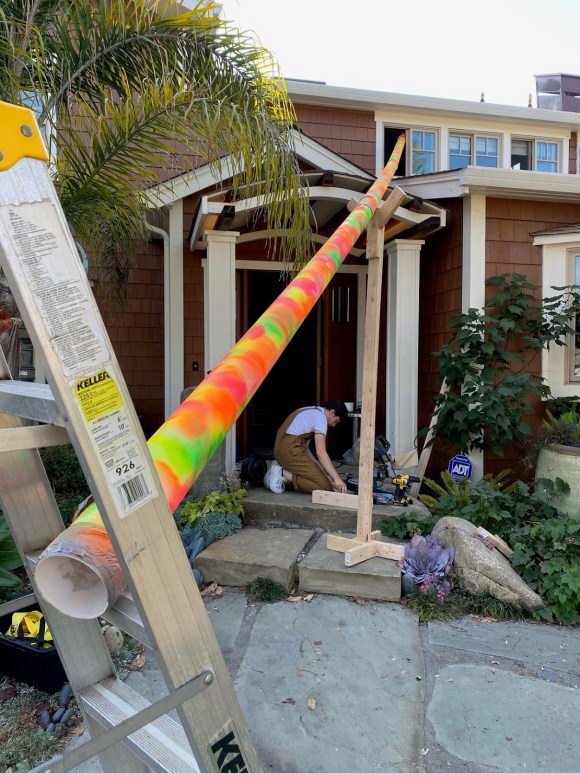
Building supports for the candy chute 
Yard in progress 
Hanging tubes with UV-reactive liquid 
Glow tubes 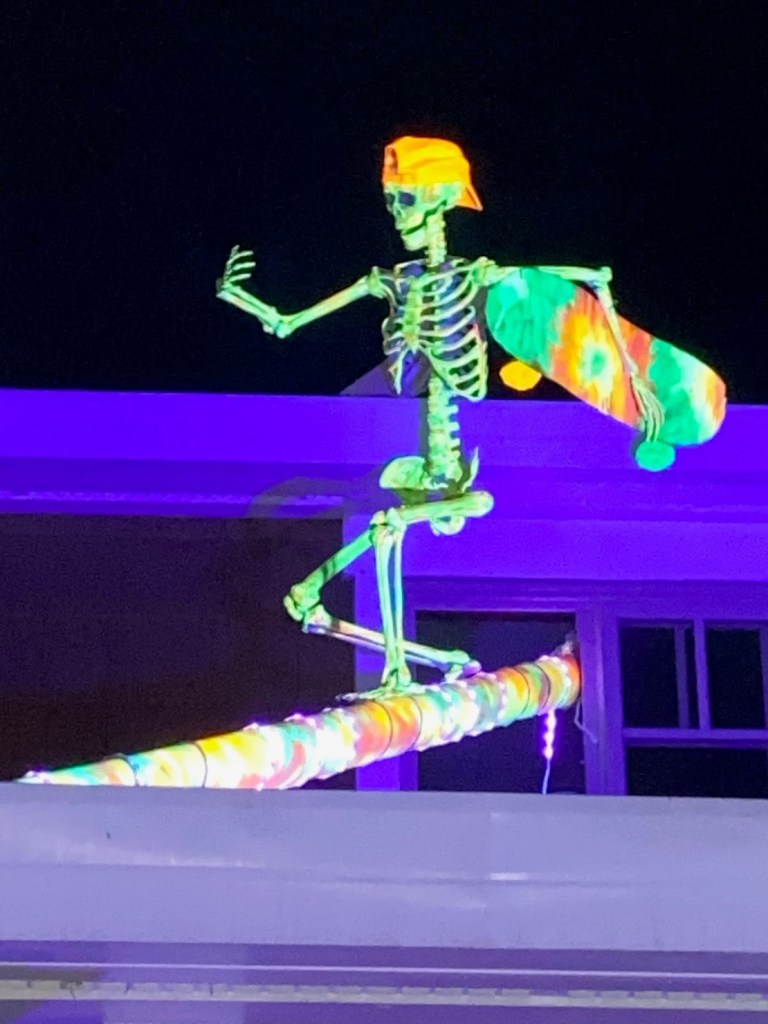
Skelly skater takes a selfie on the candy chute
 Eva Duckler